How I Pick Cat Food for Bella: Lessons from My UK Feeding Notes
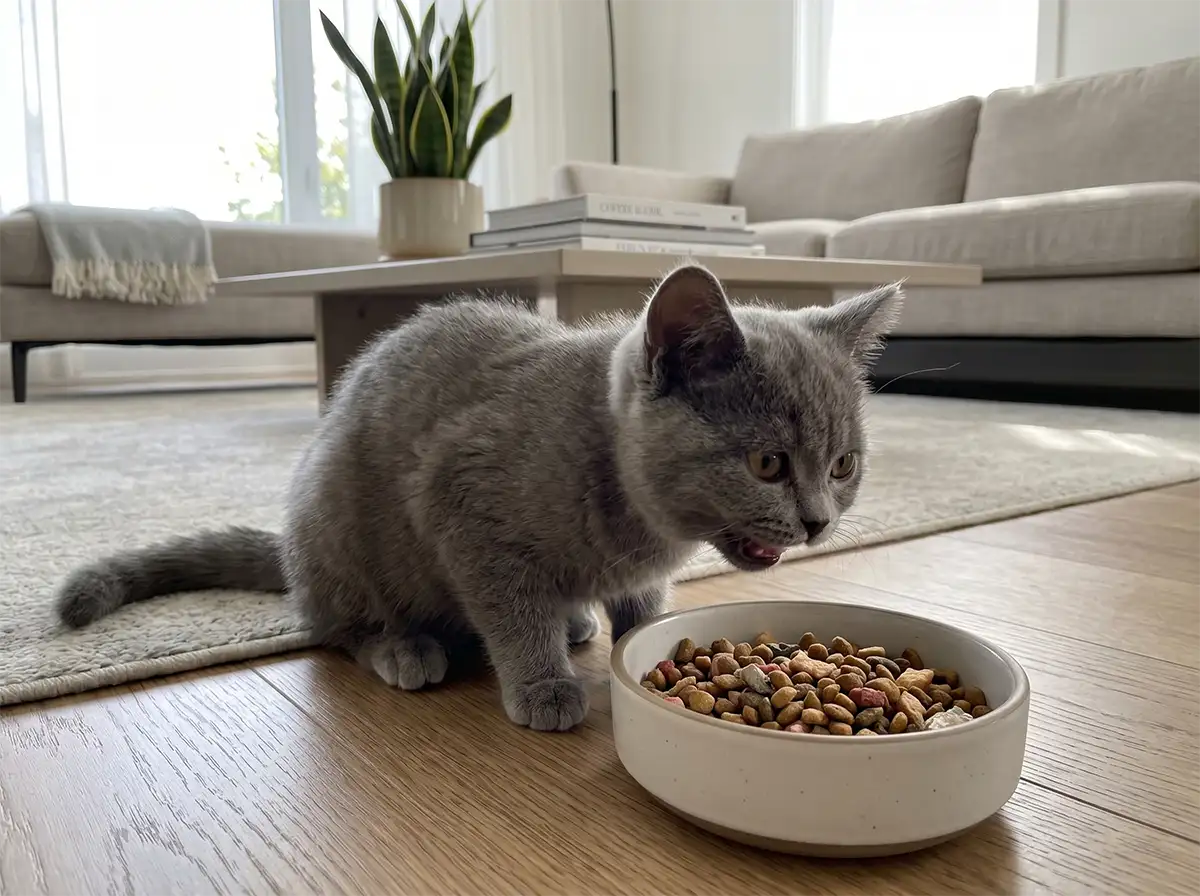
When I first brought Bella home in the UK, a wall of cat-food bags made choosing one feel harder than it should have been. We now live in China after returning together in 2026, but I still use the questions I learned to ask then.
I remember several food changes and how Bella seemed to respond. I do not have the original bags, orders or dated feeding notes needed to identify five exact products, verify their prices or rank them as tested brands. What I can share is the decision process those experiences gave me.
First, Bella’s Starting Point
Bella was about six months old when I adopted her through the RSPCA. My old notes name an adult British Shorthair formula as her first food, but I cannot confirm the product from a label. That matters: a growing kitten needs food appropriate to her life stage, and a breed name on a bag cannot settle that question.
I also remember loose stools after an early food change and later noticing dark spots on her chin. Neither observation tells me which ingredient, if any, was responsible. They made me pay more attention to Bella herself rather than to a brand’s promises.
1. Start With the Life-Stage Label
My first check now is whether a food is complete for the cat’s life stage. I would verify the actual bag used by a rescue before trying to keep a newly adopted kitten on “the same food.” I cannot use my uncertain memory of Bella’s first bag to recommend an adult formula to another kitten.
WSAVA’s food-selection guide recommends looking beyond terms such as “premium”: check the nutritional adequacy statement, calorie information, who formulates the food and how the maker checks quality. Cornell’s feeding guide also explains why nutritional needs differ between kittenhood and adulthood.
2. Give a Change Time, and Notice What Happens
I changed Bella’s food too quickly soon after adoption. I remember cleaning up loose stools and wondering whether I had made a mistake. Other foods in my notes seemed to coincide with similar trouble. With no dated record of the exact foods, portions and symptoms, I cannot separate a rapid switch from another cause, or call a grain-free recipe the culprit.
I would introduce a new food gradually with advice suited to the cat and write down the product, dates, amount eaten and stool changes. If diarrhoea persists or returns, it is a reason to speak to a vet, not to keep running unsupervised brand trials. Cornell describes several possible causes.
3. Watch Bella, Without Turning an Observation Into a Diagnosis
One food smelled appealing to Bella: she hurried to the bowl when I opened it. I also remember greasy-feeling kibble, dark spots on her chin and stretches when her stool was soft. Those details are useful reminders to observe appetite, skin and toileting, but they do not prove that a food caused a skin disease or that a high protein percentage was “too much for British Shorthairs.”
Bella has also begged for more food soon after eating. I cannot tell from begging alone whether she needs more calories. Portions and body condition need an individual assessment; I would ask her vet about weight concerns instead of treating a breed label or a percentage on a bag as the answer.
4. Check Storage Before Paying for Convenience
I remember trying a fresh-food subscription while I lived in a flat with very little freezer space. Keeping food cold crowded out my own groceries, and a delivery that arrived while I was away was wasted. I cannot identify the cat-food company or order from my present records, so this is a lesson about planning storage and deliveries, not a review of a named service.
Before ordering, I would check whether the food is a complete cat diet for the right life stage, how much space a shipment needs, the maker’s storage instructions and how to pause a delivery. “Fresh” does not by itself mean the diet is nutritionally better.
5. Compare the Cost You Can Actually Document
My notes also recall food brought from China by my mother and later sent to the UK. I liked some of Bella’s responses, but I cannot verify the exact product, freight charges, dates or whether it was cheaper than UK alternatives. The apparent improvement in her coat and chin after one change cannot establish a treatment effect.
A useful comparison would need the exact label, calories, amount Bella actually ate, shipping and any food wasted. I do not have those figures for a reliable five-brand price table. A cheaper bag is not cheaper in practice if it does not fit the cat’s needs or cannot be stored and used safely.
Sincere Tips for New Cat Owners
My shortlist is simple: confirm a complete diet for the cat’s age, check the maker’s nutritional information, plan a manageable transition, and judge cost against the amount actually fed. Keep the product details if you want to compare results later. Persistent stool or skin changes deserve veterinary advice rather than a confident guess about one ingredient.
Bella taught me to slow down and look beyond packaging. That is the experience I can stand behind; a numbered ranking of five unidentified foods would tell you more than my records can support.